
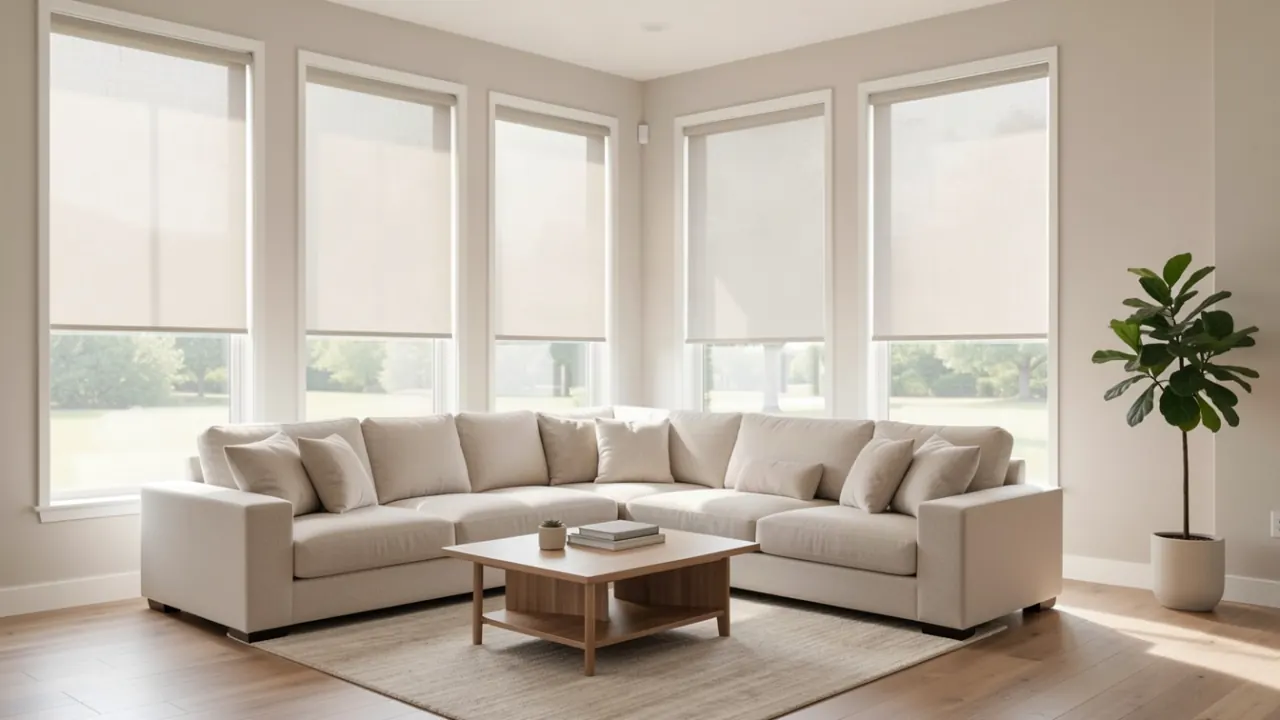
Spaces we get requests for
Plano is a business town. The Legacy Drive area in ZIP 75024 holds a run of corporate campuses between Preston Road and the Dallas North Tollway, and Wikipedia notes that about 80% of the city's visitors are business travelers. Requests come from:
- Open offices and private offices with long runs of glass
- Conference and training rooms that need full blackout on demand
- Medical, dental and therapy suites where privacy matters all day
- Lobbies, waiting rooms and childcare areas
- Hotel rooms and corporate apartments
In any space where young children spend time, the CPSC says cordless coverings, or ones with cords kids can't reach, are the only safe option.
Signs the current blinds are hurting the space
- Staff tape paper over windows or keep blinds shut all day
- Broken vertical blinds that nobody can fix anymore
- Perimeter offices that run hot every afternoon
- A conference room that can't show a slide at 3 p.m.
- Corded blinds in a waiting room
What federal testing found about office shades
The General Services Administration tested automated dual-zone indoor shades in a federal office building in Oakland. Compared with roller shades, energy use dropped 8% to 20%, and 80% of the people surveyed preferred the new shades to the old vertical blinds. The same study had lessons on what to avoid: 10% of occupants disliked the automated control, citing motor noise, one switch running several offices, and controls that didn't react to outdoor conditions. GSA found payback could stretch to 16 years and said the shades made the most sense where views out are critical.
The takeaway for a Plano office: plan the zones and controls as carefully as the fabric.
How a commercial project runs
- Walkthrough. The pro walks the space with the facility manager and notes window counts, sizes, sun direction and how each room is used.
- Samples and controls plan. Fabric openness, blackout needs, and which windows share a switch or a schedule.
- Written proposal. Line items for product, motors, controls, wiring and labor.
- Scheduling. Many offices want work done after hours or by floor. Agree on that up front.
- Closeout. The pro tests each zone, labels switches and shows staff how to use them.
Reported cost ranges
| Item | Reported cost |
|---|---|
| Motorized roller shade, installed | $300 to $550 per window |
| Motorized vertical blinds, installed | $600 to $1,200 per window |
| Motorized interior sun shade, installed | $160 to $520 per window |
| Manual roller shade, installed | $20 to $250 per window |
| Installation labor alone | $50 to $250 per window |
| Inspection for new wiring | $75 to $150 |
| Permit for new wiring | $50 to $250 |
Sources are HomeGuide's motorized blinds, solar screens and blinds guides and Angi's motorized blinds guide. These are residential guides. A commercial proposal will price controls and labor its own way, so use them only as a sanity check. More detail is on the motorized shades cost page.
What to ask the pro
- How will windows be zoned, and who controls each zone?
- Can shades tie into the building's control or lighting system?
- What fabric openness balances glare and the view?
- Are all products cordless or with inaccessible cords?
- Can work happen after hours, and who coordinates with building management?
- What's the service plan if a motor fails?
Many offices pair motorized zones with schedules described on smart home shades, and use manual custom blinds and shades in back rooms. Read the GSA's dual-zone shade findings for the full test.
Areas we cover for commercial window treatments
Questions about motorized shades
- Can office shades be grouped into zones?
Yes. Motorized shades are usually wired or paired in groups, such as one wall of a conference room or one side of a floor. The GSA study is a good warning: one switch for several offices frustrated people, so keep zones small.
- What do medical offices usually choose?
Exam rooms often get room-darkening or privacy fabrics, while waiting rooms use lighter solar screens to keep the view. Where kids wait, choose cordless or motorized products.
- Will solar screen shades block the view outside?
Not if you pick the right openness. The Department of Energy notes that a more open weave keeps more of the view and lets in more light, but blocks less heat and glare. Many offices use a denser fabric on west glass and a more open one elsewhere.
- Can installation happen outside business hours?
Many pros will schedule evenings, weekends or floor-by-floor work. Put your preferred hours in the request and confirm them in the written proposal.